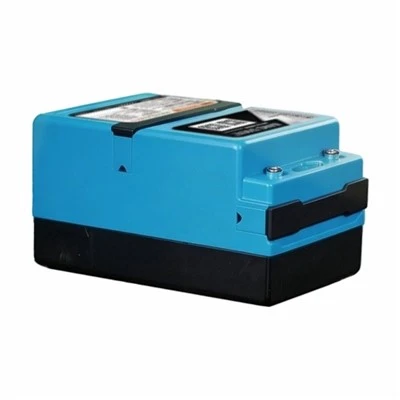
Hey there! As a power battery supplier, I'm super excited to walk you through the production process of power batteries. It's a fascinating journey that involves a whole bunch of steps, and I'm gonna break it down for you in a way that's easy to understand.
Raw Material Preparation
The first step in making power batteries is getting all the raw materials ready. The main ingredients for most power batteries are lithium compounds, graphite, and various metal oxides. These materials are crucial because they determine the battery's performance, like its capacity and how long it can last.
We source high - quality lithium from mines around the world. Lithium is a key component in lithium - ion batteries, which are the most common type of power batteries these days. Graphite is used as the anode material, and it's usually mined and then processed to make it suitable for battery use. Metal oxides, such as cobalt, nickel, and manganese oxides, are used for the cathode.
Mixing the Battery Materials
Once we have all the raw materials, it's time to mix them up. We start by making a slurry for both the anode and the cathode. For the anode slurry, we mix graphite with a binder and a solvent. The binder helps hold the graphite particles together, and the solvent makes the mixture easy to spread.
The cathode slurry is a bit more complex. We combine the metal oxides with a binder and a conductive additive. The conductive additive helps improve the battery's electrical conductivity. These slurries are mixed in large industrial mixers to ensure a uniform composition.
Coating the Electrodes
After the slurries are ready, we coat them onto thin metal foils. The anode slurry is coated onto copper foil, and the cathode slurry is coated onto aluminum foil. This process is done using a coating machine, which spreads the slurry evenly on the foil.
Once the slurries are coated, the foils are dried in an oven to remove the solvent. This leaves behind a thin layer of active material on the foils, which will act as the electrodes in the battery.
Assembly of the Battery Cells
Now comes the assembly part. We take the coated anode and cathode foils and separate them with a porous separator. The separator is important because it prevents the anode and cathode from touching each other, which could cause a short - circuit.
We then roll up the anode, separator, and cathode together to form a jelly - roll structure. This jelly - roll is placed inside a battery cell case, which is usually made of metal or plastic. After that, we add an electrolyte to the cell. The electrolyte is a liquid or gel that allows the flow of ions between the anode and the cathode, enabling the battery to generate electricity.
Cell Formation and Testing
Once the battery cells are assembled, they need to go through a formation process. This involves charging and discharging the cells a few times to activate the active materials and form a stable solid - electrolyte interphase (SEI) layer on the anode. The SEI layer is crucial for the battery's long - term performance and safety.
After the formation process, the cells are tested to make sure they meet the required specifications. We check things like the cell's capacity, voltage, and internal resistance. Any cells that don't meet the standards are rejected.
Module and Pack Assembly
If the batteries are going to be used in large applications, like electric vehicles, multiple battery cells are combined to form modules and then packs. In the module assembly, several cells are connected in series or parallel to increase the voltage and capacity. The modules are then placed in a pack, along with a battery management system (BMS).
The BMS is like the brain of the battery pack. It monitors the battery's temperature, voltage, and state of charge, and it also protects the battery from over - charging, over - discharging, and short - circuits.
Quality Control and Final Inspection
Throughout the production process, we have strict quality control measures in place. We use advanced testing equipment to check the quality of the raw materials, the electrodes, the cells, the modules, and the packs.


Before the batteries are shipped out, they go through a final inspection. This ensures that only high - quality batteries reach our customers.
Our Power Battery Products
We offer a wide range of power batteries for different applications. For high - power electric vehicles, we have the Lithium Battery for High - power Electric Vehicles. These batteries are designed to provide high energy density and long - lasting performance, making them ideal for electric cars and buses.
If you're looking for batteries for electric tricycles, our Lithium Battery for Electric Tricycles is a great choice. They are lightweight and have a good balance of capacity and cost.
Our Lithium - Ion Power Battery is a versatile option that can be used in various applications, from small electronics to large - scale energy storage systems.
For micro electric four - wheel vehicles, we have the Lithium Battery for Micro Electric Four - wheel Vehicles. These batteries are compact and efficient, perfect for small electric cars and utility vehicles.
And if you're into electric motorcycles, our Lithium Battery for Electric Motorcycles will give you the power and range you need.
Let's Talk Business
If you're in the market for high - quality power batteries, we'd love to have a chat with you. Whether you're a manufacturer looking for a reliable battery supplier or an individual interested in our products, we're here to help. Contact us to start a discussion about your power battery needs, and we'll work together to find the best solution for you.
References
- "Handbook of Batteries" by David Linden and Thomas B. Reddy
- "Lithium - Ion Batteries: Science and Technologies" by Yury M. Volfkovich, Alexander M. Skundin, and Vladimir A. Bagotsky