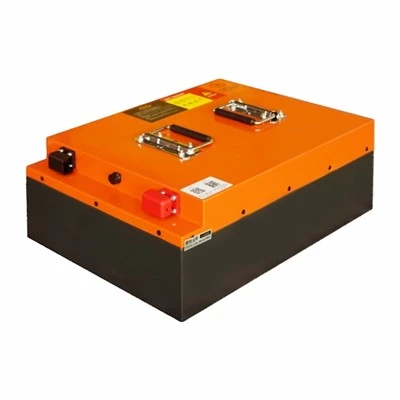
Hey there! As a supplier of specialty vehicle lithium batteries, I often get asked about the types of chemicals used in these batteries. In this blog post, I'm gonna break down the main chemicals that go into making our high - performance specialty vehicle lithium batteries.
Lithium Compounds
First off, we can't talk about lithium batteries without mentioning lithium. Lithium is the star of the show. The most common lithium compounds used in our specialty vehicle batteries are lithium cobalt oxide (LiCoO₂), lithium manganese oxide (LiMn₂O₄), lithium iron phosphate (LiFePO₄), and lithium nickel manganese cobalt oxide (LiNiₓMnᵧCoₓO₂, often abbreviated as NMC).
Lithium Cobalt Oxide (LiCoO₂)
LiCoO₂ has been around for a while and was one of the first cathode materials used in lithium - ion batteries. It offers a high energy density, which means it can store a lot of energy in a relatively small space. This makes it great for applications where size and weight are important factors, like in some high - end electric motorcycles. Check out our Lithium Battery for Electric Motorcycles that may use this compound in some of their models. The downside of LiCoO₂ is that it's quite expensive due to the high cost of cobalt. Also, it has some safety concerns, as it can overheat and even catch fire under certain extreme conditions.
Lithium Manganese Oxide (LiMn₂O₄)
LiMn₂O₄ is another popular choice. It's known for being relatively cheap to produce because manganese is more abundant and less expensive than cobalt. It has a good thermal stability, which means it can handle higher temperatures without degrading as quickly as some other compounds. This makes it a good option for electric tricycles that might be exposed to different environmental conditions. You can find our Lithium Battery for Electric Tricycles that could have LiMn₂O₄. However, it has a lower energy density compared to LiCoO₂, so the battery may be a bit bulkier for the same amount of energy storage.


Lithium Iron Phosphate (LiFePO₄)
LiFePO₄ is a real solid choice when it comes to safety and longevity. It's extremely stable, even under harsh conditions, and has a long cycle life, which means it can be charged and discharged many times without losing much of its capacity. This is great for micro - electric four - wheel vehicles that are used frequently. Have a look at our Lithium Battery for Micro Electric Four - wheel Vehicles that often utilize LiFePO₄. The main drawback is that it has a lower energy density than some of the other compounds, so the batteries might be a bit larger for the same power output.
Lithium Nickel Manganese Cobalt Oxide (NMC)
NMC is a bit of a hybrid. It combines the best features of nickel, manganese, and cobalt. It has a high energy density, similar to LiCoO₂, but with better safety characteristics. It also has a good balance between cost and performance. This makes it suitable for high - power electric vehicles that need a lot of energy in a relatively compact space. Check out our Lithium Battery for High - power Electric Vehicles that often rely on NMC batteries. The ratio of nickel, manganese, and cobalt can be adjusted to optimize different properties like energy density, power output, and safety.
Anode Materials
The anode is the negative electrode in a lithium battery. The most common anode material used in our specialty vehicle lithium batteries is graphite. Graphite is great because it can intercalate (store) lithium ions easily during the charging process. It's a stable and relatively inexpensive material. However, researchers are constantly looking for alternative anode materials to improve battery performance. Some of these alternatives include silicon - based anodes. Silicon can store more lithium ions than graphite, which could potentially increase the energy density of the battery. But silicon has some issues, like it expands and contracts a lot during charging and discharging, which can cause the battery to degrade over time.
Electrolytes
The electrolyte is the medium that allows the lithium ions to move between the anode and the cathode. In our lithium batteries, we use a liquid electrolyte, usually a lithium salt (such as lithium hexafluorophosphate - LiPF₆) dissolved in an organic solvent. The organic solvents are typically a mixture of carbonates, like ethylene carbonate and dimethyl carbonate. These solvents have good conductivity and can operate over a wide temperature range. However, they are flammable, which is one of the safety concerns associated with lithium batteries. To address this, some researchers are working on developing solid - state electrolytes. Solid - state electrolytes are non - flammable and can potentially improve the safety and performance of lithium batteries.
Separators
Separators are thin, porous membranes that sit between the anode and the cathode. Their main job is to prevent the two electrodes from touching each other, which would cause a short - circuit. They also need to allow the lithium ions to pass through easily. The most common materials used for separators are polyolefins, like polyethylene and polypropylene. These materials are cheap, have good mechanical properties, and are chemically stable in the battery environment.
Why It Matters
Understanding the different chemicals used in specialty vehicle lithium batteries is crucial. The choice of chemicals can have a big impact on the battery's performance, safety, cost, and lifespan. For example, if you need a battery with a high energy density and don't mind paying a bit more, a battery with LiCoO₂ or NMC might be the way to go. But if safety and long - term use are your top priorities, then LiFePO₄ could be a better option.
As a specialty vehicle lithium battery supplier, we carefully select the right combination of chemicals for each type of battery to meet the specific needs of our customers. Whether you're looking for a battery for your electric two - wheeler or a high - power electric vehicle, we've got you covered. Check out our Lithium Battery for Electric Two - Wheelers to see what we have to offer.
If you're in the market for specialty vehicle lithium batteries, I'd love to have a chat with you. We can discuss your requirements and find the perfect battery solution for your needs. Drop me a line and let's start the conversation!
References
- Tarascon, J. M., & Armand, M. (2001). Issues and challenges facing rechargeable lithium batteries. Nature, 414(6861), 359 - 367.
- Goodenough, J. B., & Kim, Y. (2010). Challenges for rechargeable Li batteries. Chemistry of Materials, 22(3), 587 - 603.